THE STARTING POINT
What this audience needed.
Connect electrification, storage, AI and distributed energy to the leadership decisions of a utility.
WHAT MADE IT SPECIFIC
The audience shaped the research.
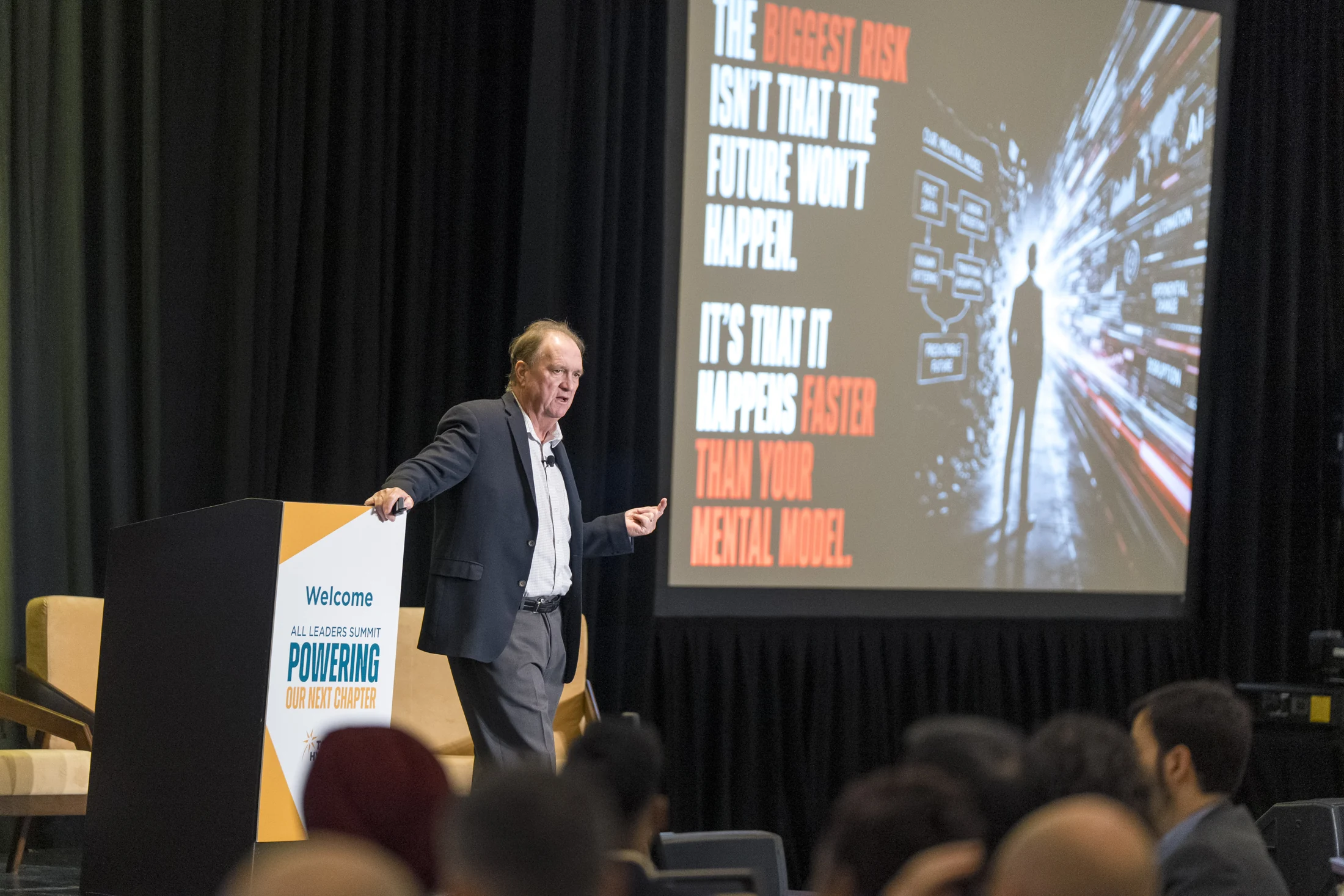
The keynote connected utility technology with utility leadership. Electrification, battery storage, AI and distributed resources were examined together, with the changing grid providing a concrete setting for discussing planning assumptions, organizational readiness and the ability to adapt. Think Big, Start Small, Scale Fast linked the future perspective with a practical leadership response.
- Electrification and demand
- Battery storage
- AI and a software-defined grid
- Distributed energy and leadership
HOW THE KEYNOTE CONNECTED THE ISSUES
What made the content specific.
Electrification changes the planning assumptions
Transportation, buildings and industry are moving electricity into more parts of the economy. For utility leaders, this raises questions about demand, investment timing and the relationship between long-lived infrastructure and faster-changing customer needs. The keynote placed electrification within the wider energy system.
Storage changes the options
Battery storage affects flexibility as well as supply. Its significance becomes clearer when connected to variable generation, local energy resources and the changing economics of the grid. The discussion linked technological capability with the choices leaders need to evaluate.
AI changes both demand and capability
AI belongs in the utility conversation in two ways: the power needs of an increasingly digital economy and the potential for more predictive, responsive operations. Connecting these dimensions helps leaders examine AI as a system issue rather than a single application.
Distributed energy changes the network
Local generation, connected assets and more multidirectional power flows challenge traditional assumptions about how a grid operates. The keynote explored a future in which coordination, visibility and flexibility become increasingly important to the utility’s operating model.
Software becomes an operating layer
Data, digital platforms and intelligent systems change the relationship between physical infrastructure and operational decisions. A software-defined grid is therefore a discussion about capability, skills and organizational readiness alongside the technology itself.
Leadership connects the technical changes
The final connection was the leadership response. Different rates of change across customers, technologies and infrastructure create uncertainty. Think Big, Start Small, Scale Fast provided a way to discuss learning, experimentation and progress while recognizing the responsibilities of a utility.
QUESTIONS THIS TOPIC RAISES
Turn the perspective into a useful discussion.
- Which planning assumptions need revisiting as demand, storage and distributed resources evolve?
- Where could better data and intelligence strengthen operational visibility and resilience?
- What capabilities and leadership practices will help the organization learn and adapt faster?
Editorial discussion prompts drawn from the themes above; these are not attributed quotations or reported client decisions.
FROM THE PUBLISHED CASE STUDY
Inside the engagement.
Jim addressed Toronto Hydro leaders at a CEO Leadership Meeting on electrification, AI, battery storage, distributed energy and the leadership challenge of navigating an accelerating energy future.
Source: Read Jim’s original case study ↗. This profile describes the keynote’s content and approach; it does not claim business results beyond those documented in the source.
BUILD ON THE INDUSTRY CONTEXT
The grid is changing faster than the plan.
Electrification, AI demand, storage and distributed generation challenge assumptions about infrastructure. The story brings technology and leadership decisions together.